
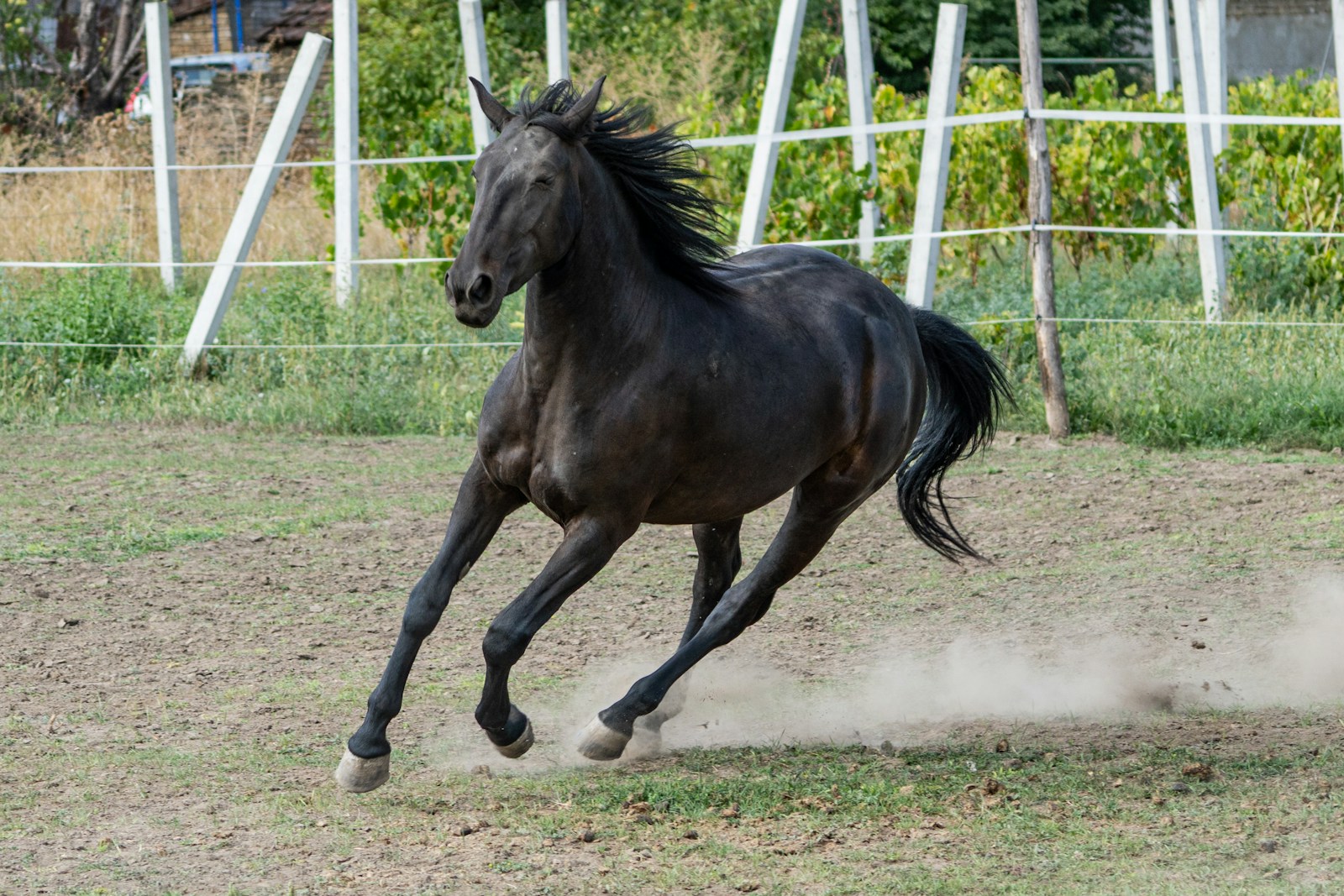
Every sound adult horse was built in its first two years — its skeleton, its tendons, its gut, even its attitude toward feed. Growth feeding is therefore not about producing size quickly. It is about producing soundness surely. The breeders who get it right share one habit: they manage the growth curve, not the calendar.
It Begins With Milk
For the first weeks of life, the mare's milk is the complete ration — and its quality depends directly on the mare's own nutrition. A lactating mare's requirements for energy, protein and minerals climb steeply, which is why broodmare feeding is really the first chapter of foal nutrition. A mare milking well on a balanced ration gives her foal the best nutritional start available.
By six to eight weeks of age, milk alone no longer covers the foal's rising needs. From this point, solid feed begins its quiet takeover — and the foal has usually been rehearsing for weeks by sampling whatever its dam eats.
Early Solid Feeding: The Creep Feed
A creep feed — offered in a space only the foal can enter — lets the youngster practise eating solid feed without competing with the mare. Introduced once the foal shows interest, a growth-formulated creep feed accustoms the digestive system to concentrates gradually and smooths the eventual transition through weaning.
The key word is formulated. Adult feeds fed at foal-sized rates deliver adult-sized nutrient concentrations — diluted protein, diluted minerals, diluted vitamins. A feed designed for growth delivers the density a small stomach requires.
Growth Rates: The Curve Is the Target
Young horses grow fastest in their first months, then progressively slower through the yearling and two-year-old years. What matters nutritionally is that the curve stays smooth. Two patterns cause trouble:
- Rapid growth from energy-dense feeding, which pushes bodyweight ahead of skeletal maturity and is associated with developmental orthopaedic problems.
- Growth stalls from underfeeding, worms or illness, often followed by compensatory growth spurts that place sudden demands on developing joints.
Weigh or weight-tape youngstock monthly and plot the numbers. A steady line — not a steep one — is what success looks like on paper.
Amino Acids: Growth Is Built From Protein
Bone, muscle, hoof and coat are all protein construction. The limiting factor in most growing-horse rations is not total protein but specific essential amino acids — lysine first, with threonine and methionine behind it. A ration can show a respectable crude protein percentage and still leave a growing horse short if its protein quality is poor.
Practically, this means choosing growth feeds and balancers that state amino acid thinking, rather than judging by protein percentage alone. Forage quality matters too: good pasture and hay carry meaningful protein, while weathered, late-cut forage carries very little.
Minerals: The Skeleton's Budget
Skeletal development runs on calcium and phosphorus — in the correct ratio, commonly cited around 1.5–2:1 in the total ration — with copper and zinc in essential supporting roles. Two warnings apply here more than anywhere else in feeding:
- Balance beats abundance. Excess calcium interferes with the absorption of other minerals; excess of almost anything creates problems rather than insurance.
- Layering is dangerous. A growth feed plus a balancer plus a mineral supplement can quietly double or triple intended intakes. Choose one coherent programme and feed it at the recommended rate.
Skeletal Development Needs More Than Feed
Nutrition sets the budget; movement does the building. Foals and young horses need free exercise — turnout with room to move — for bones, tendons and joints to adapt and strengthen correctly. The over-fed, under-exercised youngster is the highest-risk combination in the paddock. Good feeding and generous turnout are partners, not alternatives.
Weaning Without the Wobble
Weaning is the great nutritional stress test of the first year. The principles:
- Ensure the foal is already eating solid feed confidently before weaning day.
- Keep the ration unchanged through the weaning period — one stress at a time.
- Feed weanlings separately from adults so intake can be monitored and bullying avoided.
- Split concentrates into at least two small meals daily.
- Watch weight and condition weekly through the transition.
Monitoring: The Breeder's Superpower
Everything above reduces to a simple monthly routine: weigh, condition-score, look at the growth curve, adjust gently. Add your veterinarian to the loop for any angular limb changes, joint swelling, persistent unthriftiness or growth irregularity — early correction is vastly easier than late correction in growing horses.
Raise the curve steadily, keep minerals balanced, keep youngsters moving — and let time do the growing.
For the mare's side of the story, see our guide to breeding mare nutrition; for the category built around these principles, explore young horse feeding.