
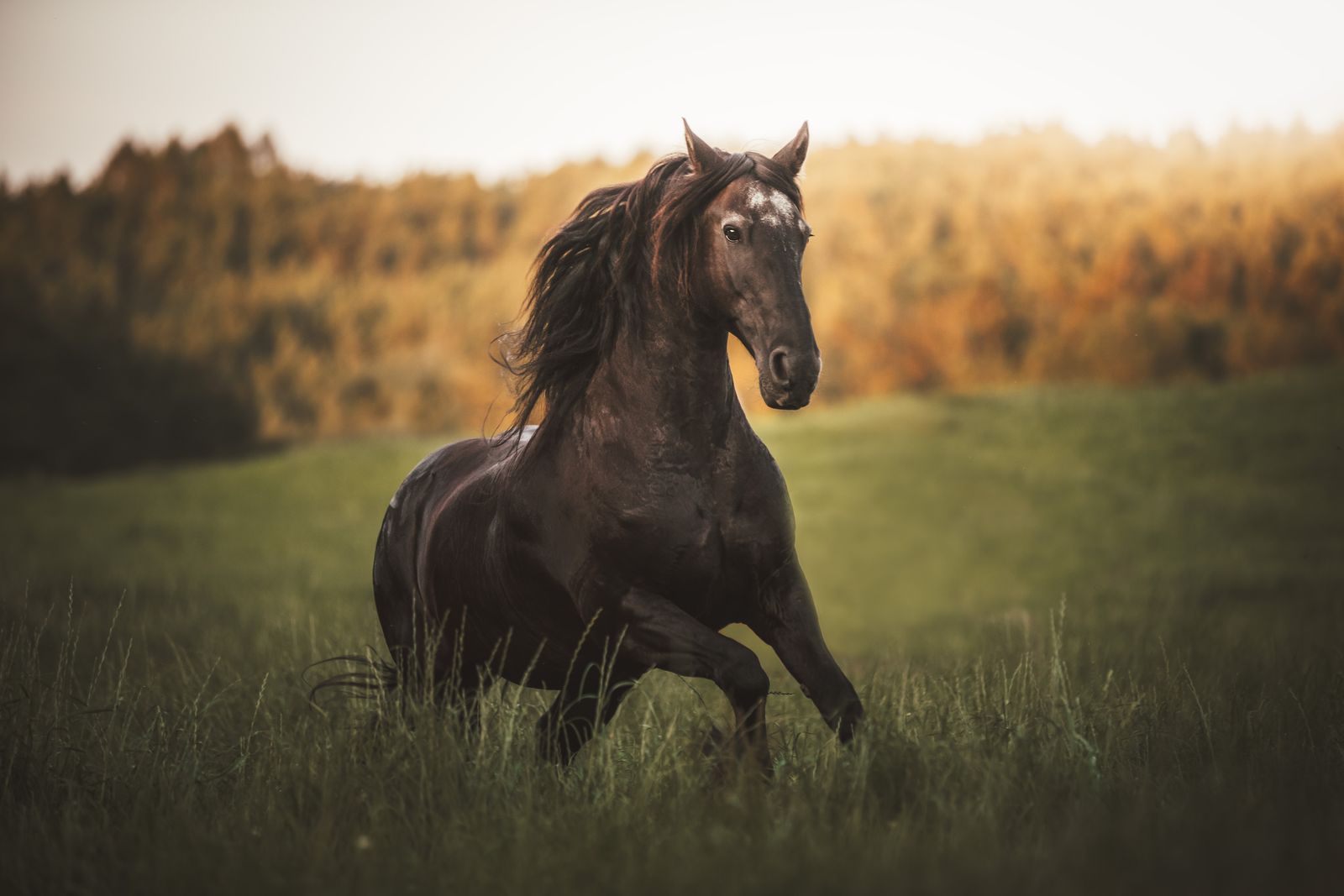
The performance horse is an athlete whose fuel tank is a fermentation vat. That single paradox — explosive power produced by a digestive system designed for grass — defines everything about feeding horses in work. Get it right and the ration becomes invisible: the horse simply performs. Get it wrong and no supplement stack will rescue it.
This guide walks through the framework we use to think about feeding horses in training: the forage foundation, energy matched to real workload, protein quality, hydration and electrolytes, and the monitoring habits that keep the ration honest.
Start Where Every Ration Starts: Forage
Whatever the discipline — dressage, showjumping, eventing, racing — the ration begins with forage. The equine stomach produces acid continuously, whether or not the horse is eating, and the saliva generated by chewing long-stem fibre is its natural buffer. Horses in work are often stabled for long periods, which makes deliberate forage provision even more important than it is for the field-kept horse.
A practical target for most performance horses is at least 1.5% of bodyweight in forage dry matter daily — around 7.5 kg for a 500 kg horse — with many doing well on more. Hay or haylage quality matters: clean, dust-free, well-made forage supports both gut and respiratory health. Hard feed exists to fill the gap that forage leaves, not to replace the forage itself.
Energy: Match the Feed to the Work Actually Done
The most common performance feeding mistake is feeding for the workload the horse is supposed to be doing rather than the one it actually did this month. Energy requirements do not rise in a straight line with ambition; they rise with measurable work — frequency, intensity and duration.
Reading the Workload Scale
Nutritionists generally describe workloads in broad bands:
- Light work — hacking and schooling a few times a week; good forage plus a balancer often covers everything.
- Moderate work — regular schooling, lessons, low-level competition; additional energy is usually needed beyond forage.
- Heavy work — frequent intense training, upper-level competition; substantial concentrate energy becomes necessary.
The trigger to move up a band is not the calendar — it is the horse. Falling body condition, flagging energy late in work or slow recovery are the honest signals that the ration has fallen behind the workload.
Choosing Energy Sources
Energy reaches the horse through three main routes: fibre fermentation (slow, steady), fats and oils (dense, cool-release) and starch from cereals (fast, glucose-driving). Modern performance feeding leans increasingly on fibre and oil for a base of sustained energy, using starch deliberately where rapid glycogen replenishment is needed. Some horses become fizzy on starch-rich rations; others handle them comfortably. The individual horse's behaviour and condition are the arbiters — not the feed room's habits.
Protein: Quality Over Percentage
Working horses break down and rebuild muscle protein daily. What they need is not an impressive crude protein number but an adequate supply of essential amino acids — lysine first among them. A ration with modest protein of high quality will out-perform a ration with abundant protein of poor quality, and excess protein is simply broken down and excreted at metabolic cost.
Well-formulated performance feeds and balancers account for amino acid supply. Where the ration is built mostly on forage, a balancer with quality protein sources usually completes the picture more efficiently than simply adding more of an ordinary mix.
Hydration and Electrolytes: The Invisible Ration
A horse can lose several litres of sweat in an hour of hard work, and that sweat is not water alone — it carries sodium, chloride, potassium and magnesium. Dehydration impairs performance long before it is visible, and electrolyte deficits affect muscle function and recovery.
The rules are simple and absolute:
- Clean, fresh water available at all times — including before and after work.
- Baseline salt in the daily ration for every horse in regular work.
- Additional electrolytes proportional to sweat losses on hot days and after hard sessions.
- Water offered before electrolyte pastes, and always alongside them.
Feeding Frequency and Timing
The equine stomach is small — roughly 8–15 litres — and empties quickly. Large concentrate meals overwhelm it, passing starch into a hindgut ill-equipped to handle it. Split the daily concentrate into at least two or three small meals, keep each meal modest (a common ceiling is around 2 kg of concentrate per meal for a 500 kg horse), and offer forage first so the stomach is buffered.
Around exercise: avoid large grain meals in the hours before work, allow forage access before riding to maintain the acid-buffering fibre mat, and let the horse cool and drink before feeding after work.
Body Condition: The Scoreboard That Never Lies
Every ration is a hypothesis; body condition is the result. Score your horse every two to four weeks — fat cover over the ribs, withers, neck and hindquarters — and keep simple notes alongside weight-tape measurements. Condition drifting down means the ration is behind the work; condition creeping up means energy exceeds need. Adjust gradually, in small steps, and re-measure.
Feed the horse in front of you this fortnight — not the horse on the training plan written last season.
Bringing It Together
Performance feeding is not complicated, but it is disciplined: a forage foundation protected at all times; energy matched to real, current workload; protein chosen for amino acid quality; water and electrolytes treated as part of the ration; small, frequent meals; and condition monitoring that closes the loop. Our performance nutrition category is built around exactly these principles, and our guide to equine digestive health explains why the gut sits at the centre of all of it.
When in doubt, go back to the forage, count the work honestly, and weigh the horse. The rest is refinement.